Most self-published authors make the same mistake: they write a book, release it, and start from scratch all over again. Yet the authors who are really doing well almost all do the same thing — they create a series.
What exactly is a children's book series?
A series is a collection of books linked by a common thread. It could be the same main character living different adventures, a recognizable visual universe, a shared theme (emotions, animals, careers...), or even just a consistent visual identity.
The idea is simple: when a child loves book 1, their parents buy book 2. And book 3. You only win a reader once — but you keep them.
For traditional publishers, this is a core part of the business. "Martine", "Le Petit Nicolas", "Tchoupi" — these are all series. Dozens of titles, millions of copies.
Why it's a great idea for self-publishing
Creating a series rather than a standalone title changes everything across several dimensions.
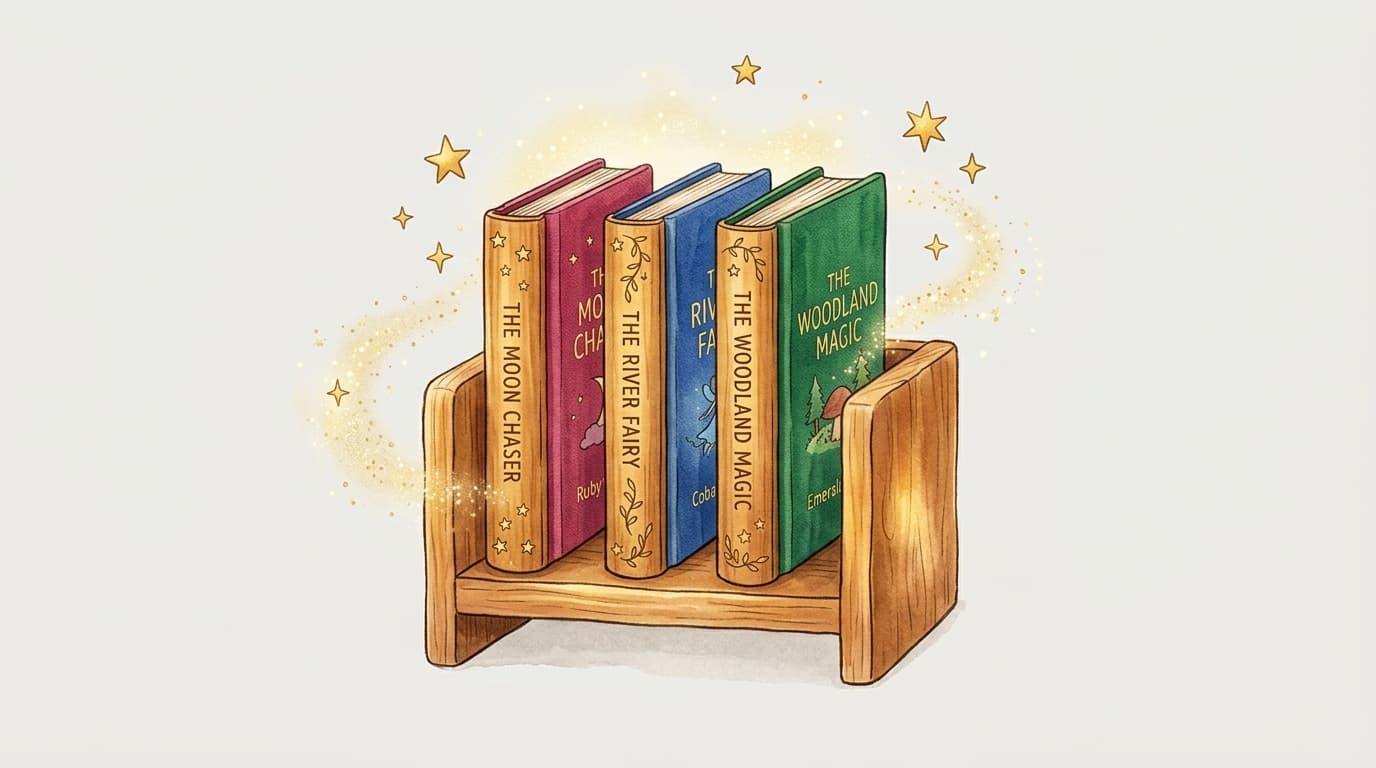
Visibility is stronger. On Amazon or in a library, 5 books with a consistent cover design and a visible series name attract far more attention than a lone title. Amazon's algorithm rewards you. When someone buys book 1, Amazon automatically suggests the next ones. That's sales with zero extra effort. Each new title takes less work. Your character is already created, the visual universe is established, and your writing style is dialed in. Every new volume takes far less time than the first one did. Word of mouth works better. "My son loves the series with the little fox" — that's so much more memorable than a standalone title.If you want to understand how to price each volume and model your income, take a look at our guide on earnings for children's book authors.
How to choose your series concept
Three approaches work well in self-publishing:
The recurring character. This is the most classic and most effective route. A child (or an animal) with a well-defined personality, living a different adventure in each book. Young readers get attached to the character — not the plot.Key criterion: the character needs a flaw or a distinctive trait that shows up in every book. Zoé is always too curious. Max can never fall asleep. That "thread" is both reassuring and entertaining at the same time.
Theme-by-episode. Each book tackles an emotion or a life situation (starting school, moving house, a new baby...). The characters can change, but the series is instantly recognizable visually.This is ideal if you're targeting gift purchases: parents going through a specific situation with their child.
The universe series. Same world, different characters, but an ultra-consistent atmosphere and visual style. Harder to set up, but incredibly strong visually.Classic mistakes to avoid
Launching a series without having thought through the next 3 books. If you don't have ideas for what comes next, you risk ending up with an orphaned book 1. Before you publish, jot down at least 5 ideas for possible future volumes.
Changing the visual style between books. That's the death of a series. A child should recognize the book before they even read the title. If you're using AI for your illustrations — like with MakerBook — keep exactly the same style and settings from one book to the next.
Expecting book 1 to fund the rest. Think series from the very start, create the first 3 books, and launch them together or in quick succession (every 2–3 months). Momentum is everything.
How many books do you need to launch?
Three is the minimum to create the series effect. With just one book, nobody talks about a series. With two, it's ambiguous. With three, buyers see a real series and it lends credibility to everything.
The ideal approach: prepare the first 3 books before you publish the first one. Launch book 1, then release the following ones every 6 to 8 weeks. Readers stay engaged, and Amazon's algorithm stays warm.
For a smooth publishing experience, the Amazon KDP guide for illustrated books covers every technical step in detail.
Frequently asked questions
Can you create a series without being an illustrator?
Absolutely. AI illustration tools like MakerBook let you generate consistent illustrations from one book to the next, maintaining the same visual style throughout. This is actually one of the biggest advantages AI has over a human illustrator: consistency can be reproduced endlessly.
Do you need to register a series name to protect it?
In France, you can register a series name as a trademark with the INPI (around €190 for one class). It's not required to get started, but if your series takes off, it's well worth it to protect the name.
How do you name a children's book series?
Go for something short, memorable, and evocative of the universe or the character. "The Adventures of...", "The World of...", or simply the character's first name all work well. Just make sure there isn't already a series with that name before you commit.
Can you create a series with personalized stories?
Yes — and it's a very promising niche. A series where each book can be personalized with the child's name, for example. MakerBook is designed exactly for that — creating unique illustrated stories that can be easily adapted and built upon.